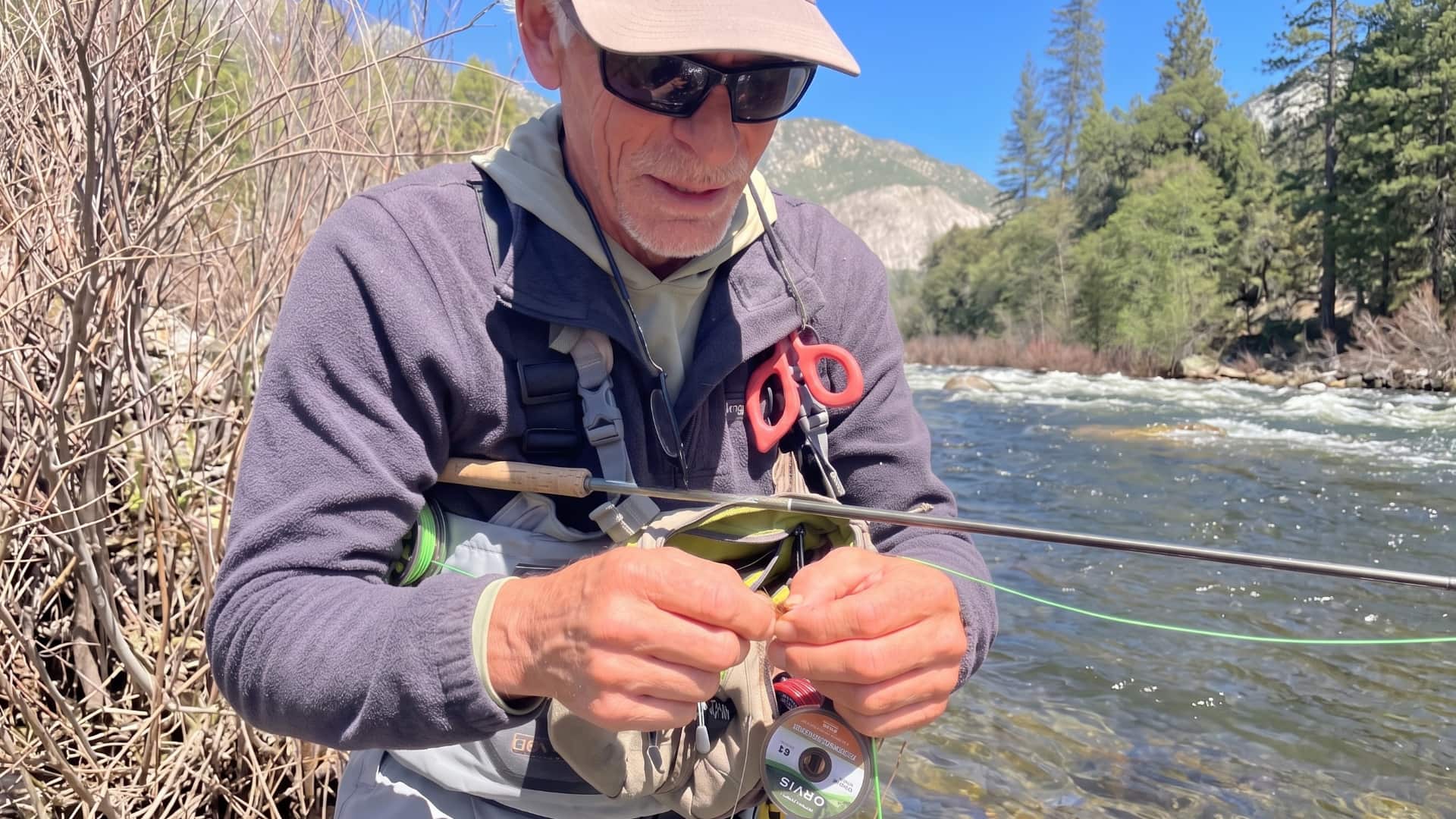


Every good drift starts at the end of your line—where the right tippet meets the fly.
When you’ve just started fly fishing, tippet can feel like one of those details everyone talks about, but no one explains clearly. You hear anglers mention 4X, 5X, 6X, nylon, fluorocarbon, leader-shy trout, and suddenly a simple piece of line feels waaay more complicated than it should. But tippet gets easier to understand once you know what it does and how it fits into your setup.
In fly fishing, the tippet is the final section of line between your leader and your fly.
It helps:
- Your fly drift naturally
- Keep your setup less visible to trout
- Give you the right amount of strength for the fish, fly size, and water conditions you’re dealing with.
In this guide, we’ll break down what tippet is, how the X rating system works, and how to choose the right tippet size for trout without overthinking it. Follow along for easy explanations and helpful tips!
Understanding Tippet in Fly Fishing
Once you know where the tippet fits, the next question is why it matters so much. In a fly fishing setup, your fly line connects to a leader, and that leader narrows (goes from thick line to thin line) down toward the fly. Most standard fly fishing leaders are tapered leaders, which means they start thicker near the fly line and get thinner as they reach the fly. The tippet is the final, thinnest section at the end of that leader, where your fly is tied on.
That thin section plays a critical role in how your fly behaves on the water:
- If the tippet is too heavy, it can make small flies look stiff or unnatural.
- If it’s too light, you may struggle with larger flies, stronger currents, or bigger trout.
The goal is to use a tippet that’s light enough for a natural drift but strong enough for the conditions you’re fishing.
Tippet helps your leader last longer:
- When you change flies, you cut off a little line each time.
- Instead of cutting back into your tapered leader over and over, you can replace the tippet section as needed.
This gives you more room to switch flies, adjust your setup, or add a second fly.
Tippet Materials: Nylon vs. Fluorocarbon
Tippet usually comes in two main materials: nylon monofilament and fluorocarbon. Both work, but they behave a little differently on the water, so the best choice depends on the type of fishing you’re doing.
Nylon Tippet
Nylon tippet is softer, more flexible, and easier to manage. It also floats better than fluorocarbon, which makes it a strong choice for dry flies and delicate surface presentations. If you’re casting small dry flies in softer water, nylon usually gives the fly a more natural look and helps prevent it from getting pulled around too much.
Fluorocarbon Tippet
Fluorocarbon is stiffer, denser, and sinks faster. That makes it especially useful for nymphing, where you want your flies to get below the surface. It is also less visible underwater and tends to hold up better around rocks, which can be helpful on clear, rocky rivers. Many fly anglers also like fluorocarbon for multi-fly rigs because the stiffer material can help reduce some tangles.
For most trout fishing, a simple way to think about it is this.
- Use nylon when you’re fishing dry flies on the surface
- Generally, use fluorocarbon when you’re fishing nymphs below the surface (although nylon can still work well for many trout setups)
- In stained water, faster current, or choppy conditions, you can often get away with a heavier tippet because trout are less likely to inspect your line closely
Choosing the Right Tippet Size for Trout
Choosing the right tippet size does not need to be complicated. A good starting point is the rule of three: divide the fly size by three to get a rough tippet size. For example, a size 16 fly usually pairs well with 5X tippet. A size 18 dry fly often works with 6X, while a size 12 nymph may call for 4X. That rule will get you close, but water conditions matter too.
A few simple adjustments can help:
- Clear water or slow pools: Size down to lighter tippet, like 5X or 6X, especially around spooky trout.
- Broken current or pocket water: Use a slightly heavier tippet for better control and fewer break-offs.
- Windy conditions: Size up when possible so larger flies turn over more easily.
- Dirty or stained water: Use a heavier tippet since trout are less likely to notice it.
- Larger flies: Go heavier for foam flies, weighted nymphs, and streamers.
The goal is to use the strongest tippet you can while still getting a natural drift. A thin tippet can help small flies move more naturally, but it also gives you less margin for error. If your tippet is too heavy, small flies can look stiff or unnatural. If it’s too light, you may break off fish, struggle to cast larger flies, or have less control in fast water.
If you’re fishing streamers, especially with a sink tip or sinking line, heavier tippet often makes more sense than what you’d use for small dry flies. For many trout streamer setups, 2X to 4X is a common range, though larger streamers or bigger fish may call for something stronger.
The main idea is simple: match your tippet to the fly, the fish, and the water. A small dry fly in clear, slow water calls for a different setup than a weighted nymph in fast current or a streamer on a sinking line.
How Long Should Tippet Be?
Tippet length depends on how you’re fishing, but for most trout setups with a standard tapered leader, adding about 1 to 2 feet of tippet is a good starting point. You can go longer when you need a softer landing, better drift, or more distance from the thicker part of the leader. (For spooky fish, increase up to 4 feet or so).
For dry flies, a slightly longer tippet can help reduce drag, especially in:
- Clear water
- Slow pools
- Spring creeks
- Alpine lakes
In these conditions, trout can often see your fly and leader more clearly, and any unnatural movement on the surface is easier to notice.
If your fly keeps skating, dragging, or looking unnatural on the surface, adding a little more tippet may help.
For nymphing, tippet length depends more on:
- Water depth
- Weight
- Indicator placement
- Whether you’re fishing one fly or a dropper rig
You want enough length to get your flies down while still keeping control of the drift. For streamers, shorter leaders and tippets often work better because they give you more control when casting heavier or bulkier flies with a fly rod.
A simple way to think about it:
- Dry flies: Use a longer tippet for a softer landing and better drift.
- Nymphs: Adjust length based on depth, weight, and current speed.
- Streamers: Go shorter for better control and stronger turnover.
- Clear, slow water: Add length if trout seem spooky or your fly is dragging.
- Fast or choppy water: You can usually keep things shorter and stronger.
How to Connect Tippet to Leader
When you connect the tippet to your leader, the goal is to keep the transition smooth. Your leader should taper down gradually, getting thinner as it gets closer to the fly. That smooth taper is one reason tapered leaders cast better than a single straight piece of line. If you jump from a heavy leader straight to a very fine tippet, your knots may be weaker, and your cast may not turn over as cleanly.
For example, if your leader ends in 3X and you want to fish 6X, it’s usually better not to jump straight from 3X to 6X. Add a short section of 4X or 5X first, then tie on the 6X. That small transition helps protect your knots and keeps the leader casting more smoothly.
For knots, you don’t need to overcomplicate it.
- A double or triple surgeon’s knot is simple, strong, and easy to tie, which makes it a great choice for most trout anglers.
- A blood knot is cleaner and works well when the two line sizes are close, but it takes a little more practice.
Tippet rings are another helpful option.
- They let you replace tippet without cutting back into your main leader every time, which can help your leaders last longer.
- Tippet rings can be especially useful if you’re trying to get more life out of your tapered leaders.
In most cases, just skip unnecessary hardware like snap swivels for standard trout dry fly and nymph setups. They add bulk, create unnatural movement, and are usually not needed. Did you enjoy this post? You’ll probably like this one too: Basic Knots for Fly Fishing: A Quick Guide You’ll Use All Season.

Dial in the right tippet and a clean knot, and a wild trout will take your dry fly with confidence.
When to Replace Your Tippet
Tippet does not last forever, especially when you’re fishing around rocks, brush, knots, and rough structure. Replace it when you notice nicks, abrasions, cloudy spots, flattened areas near knots, or anything that feels rough when you run it through your fingers.
You should also add fresh tippet when your setup gets too short from repeated fly changes. Every time you clip off a fly or retie a knot, you lose a little line. Eventually, the leader gets shorter and stops turning over the fly the way it should.
It’s also smart to check your knots throughout the day. Give the fly a gentle pull, look at the connection to the leader, and watch for coils, memory, twisting, or damaged spots. If the tippet will not straighten, keeps kinking, or keeps tangling around itself, change it before you lose a fish.
Final Thoughts on Choosing Tippet for Trout
Tippet can seem overly technical at first, but it gets easier once you stop treating it like a perfect formula. Start with fly size, adjust for water conditions, and pay attention to how your fly behaves. If it drifts naturally, turns over well, and gives you enough strength to land fish, you’re probably in the right range.
For most trout anglers, 4X, 5X, and 6X will cover a lot of situations. Use lighter tippet, like 5X or 6X, for small flies, clear water, and picky trout. Use heavier tippet, like 4X or stronger, for bigger flies, faster current, wind, or fish that need more pressure. The more time you spend on the water, the more natural those choices become.
Experience Sierra Waters with a Local Guide
There’s only so much you can learn from a blog post. On the water, every decision changes with the current, the weather, the hatch, and the fish in front of you. And the only way to master all of those different variables is through experience.
At Sierra Fly Fisher, we help you put it all together on some of the most beautiful trout water in the Sierra. Whether you’re brand new to fly fishing or want to sharpen your skills, a guided trip gives you hands-on help with casting, fly choice, reading water, presentation, and the little adjustments that make the day more productive.
If you want a trip that’s scenic, practical, and genuinely fun, book a guided fly fishing experience with Sierra Fly Fisher. We’ll help you learn more, fish better, and experience a memorable day on the water.

Sound, fresh tippet at the end of your leader is what brings a fish like this to hand.
Frequently Asked Questions
What size tippet should I use for size 16 dry flies on Sierra streams?
Use 5X tippet for a size 16 dry fly in most situations. In very clear, slow water with spooky trout, 6X may give you a better presentation.
Is fluorocarbon tippet worth the extra cost for trout fishing?
Fluorocarbon can be worth it for nymphing, clear water, rocky rivers, and situations where abrasion resistance matters. For dry flies, nylon is usually easier to manage because it is softer and floats better.
How long should my tippet be for nymph fishing?
For nymphing, tippet length depends on depth, current speed, weight, and rig style. Start with enough length to help your flies reach the feeding zone, then adjust if you are not getting down or losing control of the drift.
Can I use the same tippet size for dry flies and streamers?
Usually not. Dry flies often need lighter tippet, such as 4X to 6X, depending on fly size and conditions. Streamers usually need heavier tippet because larger flies require better turnover, more control, and stronger breaking strength.
Book Your Yosemite Fly Fishing Adventure Today
Fish legendary High Sierra trout streams with an expert guide by your side.