

Tip: take a few extra seconds to seat every knot cleanly — a connection you can trust is what keeps a good fish from becoming the one that got away.
You can have the right fly, make a picture-perfect cast with a flawless presentation and hookset, and still lose a fish thanks to a bad knot. That’s why knots matter so much in fly fishing. They can seem like a small part of your setup, but they do a lot to keep everything connected and working once you’re on the water.
Fortunately, you don’t need to learn a ton of various knots to fish well. A few basic knots for fly fishing can cover most of what you’ll need, from connecting sections of line to tying on a fly. Once you know the basics, your setup feels simpler, more dependable, and a whole lot less frustrating.
In this quick guide, we’ll walk through some of the best knots for fly fishing, when to use them, and why they matter. Whether you’re just getting started or want to feel more confident with your rig, these are the knots you’ll likely keep coming back to.
One quick note before we get into the knots: written instructions are helpful, but knots are often easier to learn when you can see them. If one of these steps feels confusing, watching a quick video tutorial can make the motion much easier to understand. Then you can come back to the written steps as a reminder while you practice.
A Few Knots That Help Set Up Your Rig
Before you start tying on flies and making adjustments on the water, it helps to understand a few knots that bring the main parts of your rig together. These are the knots that connect your backing, fly line, and leader. They’ll help you create the foundation that the rest of your setup depends on.
You may not tie them as often once everything’s in place, but they still matter. Strong connections at each point help your rig work the way it should from the start and give you a setup you can trust before you ever make your first cast.
Arbor Knot
The arbor knot connects your backing to the reel spool. It’s one of the first knots you’ll tie when setting up a fly reel, and while you may not see your backing often, this knot still needs to be secure.
To tie it, wrap the backing around the reel arbor one time. Then tie an overhand knot around the standing line. After that, tie a second overhand knot in the tag end itself. When you pull the standing line tight, the first knot slides down toward the arbor, and the second knot catches against it to hold everything in place.
It’s a simple knot, but it still matters. If it isn’t seated properly, or if that second overhand knot is skipped, the backing may not hold the way it should under pressure.
Nail Knot
The nail knot is often used to create a smooth connection between the fly line and the leader. It is a popular choice because it makes a clean, streamlined connection that passes well through the guides.
To tie it, place a small tube, nail, or knot tool alongside the fly line. Line up the thicker end of the leader with the fly line, then wrap the tag end around both several times. Feed the tag end back through the tube, remove the tool, wet the knot, and tighten everything carefully.
This knot can take a little practice, especially at first, but it’s worth knowing. Many anglers learn it at home before trying to tie it outside, since it can feel more awkward when your hands are cold or wet.
Loop-to-Loop Connection
Many modern fly lines come with welded loops already built in, which makes a loop-to-loop connection one of the easiest ways to attach your leader. Instead of tying directly to the fly line with a more permanent knot, you connect the two loops together in a way that is fast, simple, and easy to change later.
This setup is popular because it makes leader changes much quicker. If you want to switch techniques or replace a leader without cutting and retying everything, this connection saves time. It may be a little bulkier than a nail knot, but for many anglers, the convenience is worth it.
Perfection Loop
The perfection loop is a useful knot because it creates a clean, straight loop at the end of a leader or butt section. It is often used when you want to make that loop-to-loop connection with a welded fly line loop.
This knot can feel awkward the first few times you tie it, but once you learn the steps, it becomes a very handy one to know. It helps create a neat connection and makes it easier to swap leaders when needed.
The Knots You’ll Reach for Most Often
Once you’re on the water, a few knots tend to do most of the work. You’ll use them to tie on a new fly, add fresh tippet, or fix part of your leader during the day.
That’s why these knots are worth learning first. You don’t need to know every fly fishing knot right away. If you can tie a few basic knots well, you’ll be able to handle most of the situations that come up while you’re fishing. Let’s get to it.
Improved Clinch Knot
The improved clinch knot is one of the most common knots for fly fishing, especially for attaching a fly to your tippet. It has been around a long time because it’s simple, dependable, and not too hard to learn. For a lot of anglers, it’s one of the first fly fishing knots they ever use.
To tie it, thread the tippet through the eye of the hook and wrap the tag end around the standing line several times. Then pass the tag end through the small loop near the eye, and after that, pass it back through the larger loop you just made. Wet the knot and pull it tight slowly so it seats neatly.
This is a great knot to know because it works in a lot of everyday situations. If you want something basic and reliable that you can tie without a lot of fuss, this is a strong one to start with.
Orvis Knot
The Orvis knot is another strong option for attaching a fly. A lot of anglers like it because it’s quick to tie, strong, and often easier to manage than some older knots once you get used to the steps.
The Orvis knot also cinches down neatly, which makes it a good choice when you’re tying smaller flies or trying to keep your setup clean. It may take a few tries to get the motion down, but once it clicks, it’s a fast knot to use on the water.
Double Surgeon’s Knot
The double surgeon’s knot is commonly used to connect two sections of line, especially when you’re adding tippet to a leader. It’s one of the easiest knots to learn for that job, which is a big reason so many anglers rely on it.
To tie it, overlap the ends of the two sections you want to connect. Form a loop, then pass both tag ends through it two times before pulling everything tight. Wet the knot first, then tighten it carefully so it seats evenly.
This knot is popular because it’s quick and forgiving. It may not look as clean as some other line-to-line knots, but it’s easy to tie on the water and works well in a wide range of situations.
Blood Knot
The blood knot is another common knot for connecting two sections of line, especially when building or repairing leaders. It creates a smoother, more streamlined connection than a surgeon’s knot, which is one reason many anglers like it.
That said, it usually takes a little more practice. You wrap each tag end around the standing line of the other section, then pass both tag ends back through the center before tightening everything down. It’s not the hardest knot in fly fishing, but it can feel more awkward to tie, especially with cold fingers or smaller material.
Still, once you learn it, it’s a really useful knot to have in your back pocket. It’s one of the best knots for fly fishing when you want a cleaner leader connection.

These are the everyday knots you’ll reach for most — tying on a fly, adding fresh tippet, and getting your line back on the water fast.
A Few Tips That Can Save You Trouble
Even the best knots for fly fishing can fail if they’re rushed or not tightened properly. Knowing which knots to use matters, but a few simple habits can make them much more reliable and save you some frustration on the water.
When you’re still learning, small details make a big difference. A few extra seconds of care can help you avoid weak connections, lost flies, and problems that are easy to miss at first. These are some of the habits worth paying attention to:
- Wet the knot before tightening it. This helps reduce friction and makes it easier for the knot to cinch down smoothly.
- Tighten slowly, not all at once. Pulling too fast can make the knot seat unevenly or weaken the line.
- Test each knot before you fish. A firm pull can tell you right away if something is off before a fish finds out for you.
- Trim tag ends cleanly, but not too close if you are still learning. Leaving just a little extra can give you some margin for error.
- Practice a few knots until they feel automatic. It is better to know a small handful of basic knots for fly fishing really well than to know a long list you cannot tie confidently.
- Retie when something looks worn or questionable. If your tippet looks curled, frayed, or nicked near the knot, it is usually worth taking a minute to redo it.
These small habits can help you avoid weak knots and unnecessary problems, whether you’re tying on streamers, dry flies, or nymphs. Taking the time to get your knots right is especially important when targeting big fish, where a strong, reliable connection can make all the difference.
Over time, these habits become second nature and make the whole process feel a lot smoother.
Get Comfortable with a Few and Build from There
Learning knots can feel like one more thing to figure out in a sport that already has a lot going on. But once you get a few of the main ones down, everything starts to feel easier. You spend less time second-guessing your setup and more time paying attention to the water, your drift, and the fish.
That’s really the goal. You don’t need to master every knot out there. You just need a few that you trust and can tie well when it counts. Start with the ones you’ll use most, practice them until they feel natural, and build from there. That simple foundation will take you a long way in fly fishing. Did you enjoy this post? You’ll probably like this one too: What Is a Tippet in Fly Fishing? How to Choose the Right Size for Trout

When a wild Sierra trout finally commits, it’s a clean, well-tied knot that turns the take into the catch.
Take What You’ve Learned to the Water
Learning a few solid knots is a great start, but fly fishing really starts to click when you’re on the water putting everything together.
At Sierra Fly Fisher, our guided trips are about more than helping you catch fish. We help you read water, choose the right flies, approach different currents, and make smart adjustments throughout the day. You’ll also get a better feel for presentation, drift, and the small setup changes that can make a big difference.
That kind of learning is hard to get from reading alone. When you fish with us, you get local guidance from people who know these waters and can help you understand what to look for, what to change, and how to fish with more confidence.
If you want to keep learning on the water, book a guided fly fishing trip with Sierra Fly Fisher. We’d love to help you spend a day fishing some of the Sierra’s best trout water!
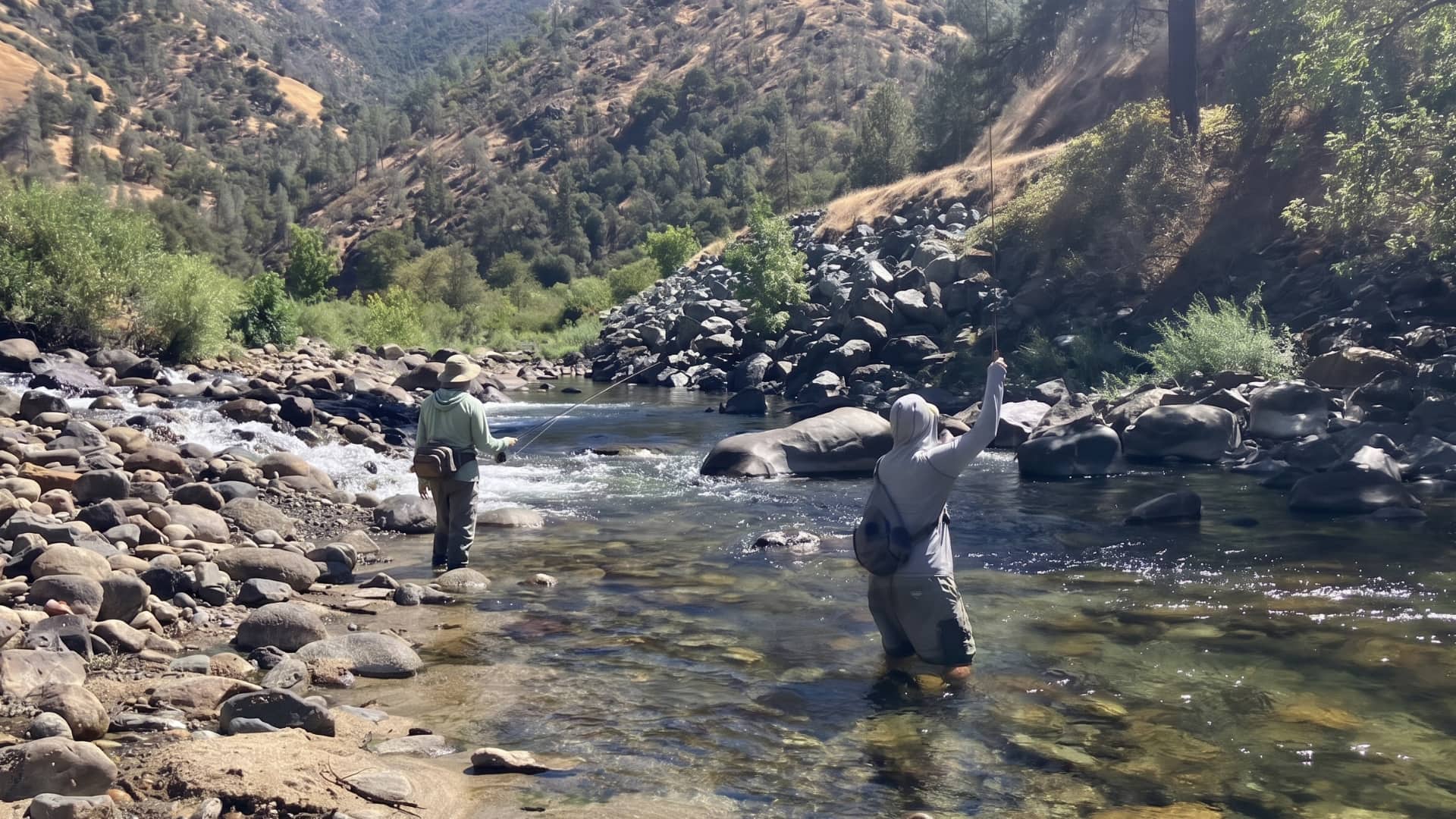
Learn More on the Water with Sierra Fly Fisher
Book a guided trip and gain hands-on knowledge from guides who know these waters.


