
Fly fishing is a far cry from regular fishing. Instead of casting a heavy lure or bait, you’re casting the weight of the fly line itself. That line carries a tiny, lightweight fly out over the water where it can land softly and look like something a fish might actually eat.
It takes some practice, but that’s part of the fun. Fly fishing slows you down. You start paying attention to the current, the bugs, the shade, the riffles, and the way trout hold in moving water. Whether you’re hoping to fish a mountain stream, a quiet river, or a local pond, this guide will walk you through the basics.
You’ll learn what gear you need, how fly casting works, how to read the water, how to choose a fly, and how to handle fish the right way.

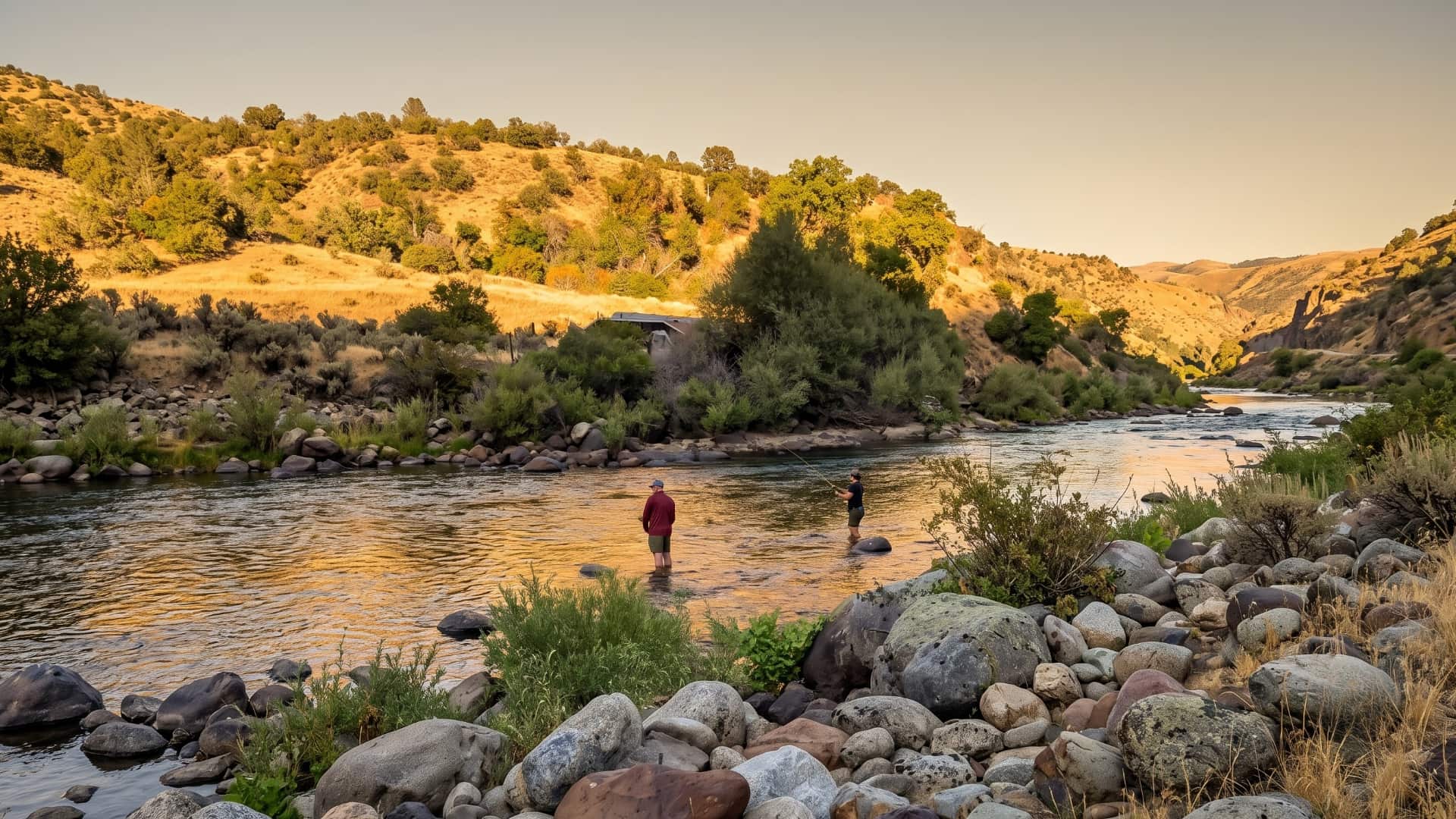
Fly fishing slows you down — you learn to read the current, the shade, and where trout choose to hold.
Good to Know Before You Start
- You’ll need a few fly fishing basics: a fly rod, reel, fly line, leader, tippet, and flies.
- It helps to practice casting before your first real trip. A grassy yard or local pond is fine, and you can tie on a small piece of yarn instead of a fly while you learn.
- Check your local fishing rules before you go. Some waters have special trout regulations, barbless hook rules, or seasonal closures.
- Try to start on a calm day. Wind makes fly casting harder, especially when you’re still learning.
- Don’t worry about casting far at first. A good short cast is more useful than a long messy one.
- Fly casting is more about timing and technique than strength. If you try to muscle it, the cast usually falls apart.
With those basics out of the way, let’s jump into what fly fishing is, how it works, and what you need to know before your first day on the water.
What Makes Fly Fishing Different
Fly fishing is part casting, part observation, and part problem-solving. You’re not just throwing something out and reeling it back in. You’re watching the water, making small adjustments based on your observations, and learning why a fish might eat in one spot and ignore your fly in another.
That’s what makes it challenging at first — and so rewarding once it starts to click. It’s part puzzle, part skill, and entirely absorbing.
Essential Gear Setup
You don’t need a garage full of equipment to start fly fishing, but you do need a setup that works together. For most beginners, that means a fly rod, reel, weight-forward floating line, leader, tippet, a few flies, and a handful of simple tools. If you’re mainly fishing trout streams, ponds, or small lakes, a 9-foot, 5-weight setup is one of the best and easiest places to start because it’s versatile, forgiving, and useful in a lot of common fishing situations.
Fly Rod
Again, for most beginners, a 9-foot, 5-weight fly rod is a great all-around choice. It’s one of the most common trout setups because it can handle rivers, streams, ponds, and lakes without feeling too heavy or too delicate.
Fly rods come in different “weights.” This rod size system runs from 00 to 16. Lighter rods are better for small streams, tiny flies, and delicate presentations. Heavier rods are better for bigger fish, larger flies, and windy conditions. A 5-weight sits right in the middle, which makes it forgiving while you’re learning.
Fly Reel
Your reel should match the size of your rod and line. For beginner trout fishing, it doesn’t need to be the fanciest part of your setup. Most of the time, its main job is to hold your fly line and backing.
A large arbor reel is a good choice because it picks up line faster and helps reduce coils in the line. That makes it a little easier to manage loose line when you’re standing in the water or stripping line in by hand.
Fly Line
Fly line is what makes fly casting work. Since the fly is too light to cast on its own, the weight of the line carries the fly forward.A weight-forward floating line is usually the best choice for beginners.
Most fly lines sold today are about 100 feet long, and many beginner setups use a weight-forward taper to help keep the fly in the right part of the water column. It’s easier to cast and works for a lot of common fly fishing situations, including dry flies, nymphs under an indicator, and small streamers.
Leader and Tippet
The leader is the clear line that connects your fly line to your fly. Most beginners can start with a 9-foot tapered leader in 4X or 5X. Tippet is the thinner section of line at the very end of your setup.
It helps your fly look more natural in the water and gives you extra line to work with when you change flies. Thinner tippet can be harder for fish to see, but it also breaks more easily, so don’t overthink it too much at first. We covered this in our previous article: What Is a Tippet in Fly Fishing? How to Choose the Right Size for Trout
Helpful Accessories
You don’t need every gadget right away, but a few small tools make fly fishing much easier.
- Polarized sunglasses to protect your eyes and help you see into the water
- Nippers for cutting line
- Forceps for removing hooks
- A small fly box
- Floatant if you’re fishing dry flies
- Split shot and indicators if you’re nymphing
It also helps to learn a couple of basic knots early on. The improved clinch knot and surgeon’s knot will cover most beginner situations and keep you from having to learn everything at once.
Start simple. The goal is not to own every piece of gear right away. It’s to have a setup that casts well, feels manageable, and lets you spend more time learning on the water.
Basic Casting Techniques
Casting is one of the first things new fly anglers worry about, but it does not have to be perfect right away. The goal in the beginning is simple: learn how the line moves, keep your motions smooth, form correct, and give the line enough time to straighten out behind you before bringing it forward.
Before you cast, take a quick look around. Trees, brush, rocks, and steep banks can all get in the way, especially on your backcast. A little awareness before you start can save you from losing flies in the branches behind you.
The Overhead Cast
The overhead cast is the basic fly cast most beginners learn first. Start with a short amount of line in front of you, then add distance in roughly 2-foot increments as accuracy improves, instead of trying to cast across the whole river on your first cast. Lift the rod smoothly, stop the rod tip behind you, and let the line unroll. Then bring the rod forward and stop again so the line can roll out in front of you. As you get comfortable, you can carry more line to reach fish that are farther out.
Try not to force it. A good fly cast is more about timing than power. If you rush the forward cast before the line straightens behind you, the whole cast tends to collapse. Short, controlled casts are much more useful than trying to throw a long cast before you’re ready.
The Roll Cast
The roll cast is great when you don’t have much space behind you. If there are bushes, rocks, trees, or a steep bank in the way, you can use a roll cast to get the line out without doing a full backcast.
To do it, bring the line beside you and let it form a loose loop on the water. Then move the rod forward so the line rolls out ahead of you. It’s not flashy, but it’s one of the most useful casts for fishing small streams and tight spots. Keeping more of the fly line on the water with this cast also helps you feel even the slightest bite.
Practice Makes Progress
Fly casting gets better with practice, and a little patience goes a long way. Tangles, missed casts, and awkward loops are just part of learning. Try practicing in your yard, at a pond, or anywhere you’ve got enough room to move the line safely. Instead of using a fly, tie on a small piece of yarn while you get the hang of it.
Keep your casting stroke short and controlled. Big arm movements usually make casting harder, not easier. Let the rod bend, pause long enough for the line to straighten behind you, then bring it forward. If you can get a few tips from a guide, a local fly shop, or an experienced angler, it can make a big difference early on.
Did you enjoy this post? You’ll probably like this one too: Mastering Fly Casting Techniques: A Complete Guide.
Hooking, Playing, and Releasing Fish
Getting a fish to take your fly is exciting, but the next few seconds are critical. The goal is to set the hook, keep steady pressure, and land the fish without rushing it.
When you see or feel a take, lift the rod tip with a smooth, firm motion. With a dry fly, you’ll usually see the fish rise to the surface. Try not to yank too fast. Give it just a beat (silently count “one one-thousand”), then lift. With nymphs, watch your indicator closely. If it pauses, dips, twitches, or moves in a way that looks different from the current, set the hook.
Once the fish is on, keep your rod tip up and maintain steady tension. Don’t try to drag the fish in too quickly, especially if you’re using light tippet. Let the rod bend, let the reel do its job if the fish runs, and guide the fish toward calmer water when it starts to tire.
A net makes landing fish much easier and safer, especially if you plan to release them. Use a rubber or soft-mesh net when possible, and keep the fish in the water as much as you can.
Handling Fish Carefully
If you’re practicing catch and release, a few small habits make a big difference.
- Wet your hands before touching the fish so you don’t damage its protective slime coating.
- Use barbless hooks, or pinch the barb down, to make releases faster and easier.
- Keep the fish low and over the water while unhooking it.
- Support the fish gently with two hands if you need to lift it.
- Take photos quickly, then get the fish back in the water.
To release a tired fish, hold it facing upstream so water can move through its gills. Give it a moment to recover, and let it swim away on its own when it’s ready.
When to Go Fly Fishing
You can fly fish in most seasons, but the best time to go depends on water temperature, weather, insect activity, and the kind of water you’re fishing. Instead of thinking there’s one perfect season, it helps to learn how fish behave as conditions change.
Spring can be a good time to fish once the water starts to warm and insects become more active. Midday is often better than early morning because the water’s had time to warm a little. Fish may hold in slower pools, deeper runs, and softer edges where they can feed without fighting heavy current.
In summer, early morning and evening are usually better, especially for trout. When the day gets hot, fish often move into deeper, cooler water or shaded areas. Look for riffles, spring fed sections, deeper pools, and banks with cover.
Fall can be one of the most enjoyable times to fly fish. The weather cools down, crowds often thin out, and fish may feed more actively before winter. It’s also a good time to try ants, beetles, grasshoppers, and other terrestrial patterns near grassy banks or overhanging vegetation.

Wet hands, a soft-mesh net, and a quick release send every trout back strong.
How Long Does It Take to Learn Fly Fishing?
Fly fishing, like pretty much anything worth doing, takes time to learn. You can learn the basic idea pretty quickly, but getting comfortable with casting, reading water, choosing flies, and making a natural drift usually takes repeated practice.
On your first outing, the goal isn’t to do everything right. It’s enough to get a feel for the rod, see how the line moves, practice a few short casts, and start noticing where fish might hold. If you catch a fish, great. If not, you’re still learning.
After a few trips, some of the pieces may start to make more sense. You might begin to control your cast better, manage your line with less frustration, and understand why one spot looks more promising than another. You’ll probably still tangle leaders, miss hook sets, and put flies in trees. Everyone does.
With regular time on the water, you’ll start building real confidence. You’ll learn when to slow down, when to change flies, where to place a cast, and how to adjust when fish aren’t responding.
That’s part of what makes fly fishing so rewarding. There’s always more to learn, but you don’t have to know everything to enjoy your first days on the water.
Hone Your Skills with Sierra Fly Fisher
Reading about fly fishing is helpful, but there’s no substitute for time on the water. A guided trip gives you a chance to practice in a real setting, ask questions as they come up, and get a better feel for how fly fishing works on Sierra rivers and streams.
At Sierra Fly Fisher, our guided trips are a good fit for beginners who want a relaxed introduction to the sport, as well as experienced anglers who want to fish incredible local water with someone who knows it well. Along the way, you can work on casting, reading water, choosing flies, making better presentations, and handling fish carefully.
For newer anglers, a guided trip can take some of the guesswork out of getting started. For experienced fly fishers, it’s a chance to explore productive water, learn local patterns, and spend a day fishing some of the most beautiful trout country in California.
When you’re ready, book a guided fly fishing trip with Sierra Fly Fisher and spend a day learning, fishing, and enjoying the water.

A day on the water with a guide can shortcut months of trial and error.
Frequently Asked Questions
What gear do I need to start fly fishing?
To get started, you’ll need a fly rod, fly reel, fly line, leader, tippet, flies, and a valid fishing license. For many beginners, a 9 foot, 5 weight rod with a weight forward floating line is a good all around setup, but it still helps to practice casting with controlled movements. Polarized sunglasses, nippers, forceps, and a small fly box are also helpful, and each artificial fly is designed to imitate the insects or other food fish expect to see.
How difficult is fly fishing to learn?
Fly fishing takes practice, but you don’t need to master everything before you enjoy it. Most beginners can start learning the basic cast, how the line moves, and how to make a simple drift on their first outing. Getting comfortable with reading water, choosing flies, and adjusting to different conditions takes more time.
What’s the best fly rod for beginners?
A 9 foot, 5 weight fly rod is a solid beginner choice for trout fishing. It’s versatile enough for rivers, streams, ponds, and small lakes, and it gives new anglers a good balance of control and forgiveness while they’re learning.
Can I fly fish without taking lessons?
Yes, you can learn on your own, but a lesson or guided trip can make the process much easier (and faster). A guide can watch your cast, help with timing, point out likely water, and help you understand what’s happening while you fish. YouTube videos are a helpful starting point for beginners and can make gear and technique feel less intimidating, but live instruction is still one of the best ways to avoid bad habits and get feedback that’s hard to replace.
What fish can I catch fly fishing?
Trout and salmon are probably the fish most people think of targeting with a fly rod, including rainbow, brown trout, brook, steelhead, and cutthroat trout. But fly fishing works just as well for bass, panfish, carp, and many saltwater species. If a fish eats insects, baitfish, or other small prey, there’s a good chance someone has figured out how to catch it on a fly.
Book Your High Sierra Fly Fishing Trip
Guided trips for first-timers and seasoned anglers alike.


