
![Fly Fishing for Trout [Masterclass] SFF](https://sierraflyfisher.com/wp-content/uploads/2025/11/Fly-Fishing-for-Trout-Masterclass-SFF-.webp "Fly Fishing for Trout [Masterclass] SFF")

In this guide, we’ll cover the essentials like reading the water, knowing what’s hatching, and choosing productive spots. Then we’ll dial in your approach: how to move without spooking fish, where to stand, how to control your drift, and when to switch tactics.
Finally, we’ll walk through the main types of flies and when they make sense to use, along with simple setups. Follow along as we break everything into clear, repeatable steps to help you catch more trout.
Why Fly Fishing for Trout
Fly fishing draws people in because it’s so hands-on. You’re not just casting a line—you’re reading the water, adjusting your cast, making small choices, and seeing them play out in real time. Get it right, and the line. It’s focused, satisfying, and the kind of simple reward that keeps you coming back.

Some days they feed gently on the surface; other days they take just below or pull hard from deeper runs. That variety keeps you on your toes and makes every moment on the water a little different.
Understanding Trout Behavior
Trout split their time between resting, feeding, and seeking cover. Most of their feeding happens where the current slows and near protective cover because these spots let them conserve energy, stay safe, and intercept drifting food with minimal effort. Below are some clues for where to look first, what the bugs are telling you, and how light and flow influence fish placement so you can target water worth fishing.
When and How They Eat (Reading the Hatch)
A hatch happens when certain aquatic insects emerge from their underwater nymph or larval stage into adults, often to mate and lay eggs. As they rise to the surface, drift along it, or fly off, they become more available to trout. Your job is to notice where in the water the trout are feeding and what type of insects are present, because that will guide your choice of fly pattern and size.
Soft, steady rise rings indicate fish are taking insects on top. Small noses or boils just below the surface show insects moving through the film. If the surface stays quiet but the river still feels active, most feeding is happening underneath.
Watch for size, color, and behavior: tiny or small; pale, olive, or dark; drifting calmly, fluttering, or mostly out of sight. If nothing is obvious on top, lift a small rock near shore to see the average size and shade of what’s living there. Let these clues guide whether you fish the surface, just below, or deeper, and how smoothly your fly should move.
How Light, Flow, and Temperature Change Things
Low light in the morning, evening, or on overcast days lets trout move closer to the surface because they feel safer and less exposed. The bright midday sun usually pushes them toward deeper water and cover.
When the river rises and the current strengthens, trout often move into slower water along the edges of the bank or behind rocks and logs, where they can feed more easily. When the water drops and slows, fish often gather in the deeper parts of the river where food naturally drifts through. Temperature matters too. Cold water slows feeding and can push the best bite times later in the day, while warm summer water encourages trout to hang in faster, well-oxygenated spots.
Good Places to Look for Trout
Look for spots where the current eases up a bit and cover is nearby. Try slower water next to faster current, a calm pocket just downstream of a rock or log, the inside of a bend where the flow softens, or the deeper stretch at the end of a pool.
Start with the water closest to you, then work your way out so you don’t cast over fish you haven’t tried yet. Stay low, move quietly, and only wade as far as you need. Let your leader and fly drift at the same speed as the current so it looks natural and light takes are easier to see.
When the river is running high, focus on gentler water along the bank. When it’s low and clear, lean on deeper water and shaded areas. And if a stretch stays quiet after a few honest drifts, don’t linger—slide to the next likely spot.
How to Fish Trout: Flies & Techniques
Trout feed at different levels in the water, and knowing how to present your fly in each zone is key to success. Below, we cover the basics of fishing the surface, the film, and just below it, including nymphs and streamers.
Nymphing (Fishing Below the Surface)
Nymphing involves sending small underwater imitations through the trout’s feeding lane. Keep the fly close to the bottom, occasionally grazing but not dragging. Cast slightly upstream, let it sink, and drift naturally. Use simple rigs: one or two nymphs, minimal weight, and a small strike indicator when needed. Adjust angle, depth, weight, or pattern one at a time.
Dry Flies (Fishing on the Surface)
Use dry flies when trout are rising. Land the fly softly, keeping the leader and fly moving at the same current speed. Favor short, accurate casts over long ones. Adjust your angle or shorten the drift before switching flies. Move your feet to change angles rather than adding line. Learn more about When to Use a Dry Fly vs a Wet Fly & Key Differences here.
Fishing the Film (Emergers & Soft Hackles)
Sometimes trout feed just under the surface. Look for small movements on the water, tiny splashes, ripples, or soft disturbances that mean a fish is feeding. Let your fly drift just below the surface, keeping a light feel on the line and your drifts short and tidy. At the end of each drift, give a small lift. This often triggers a bite. Before changing flies, try adjusting your angle or the length of your drift. If the fly needs to sink a bit, add just a little weight.
Streamers (Targeting Banks and Cover)
Streamers are effective when the water is quiet, light is low, or fish are near rocks, banks, or downed wood. Use a short leader, cast across and slightly downstream, and retrieve with short pulls and pauses. Most strikes happen during the pause or right after the first few pulls. Keep moving along the cover to show fresh water, and adjust angle, speed, or depth as needed. Read our Fly Fishing Streamers: The Definitive Guide for more tips.
Weighted Flies
Weight helps flies reach the feeding zone. Start light and add weight if the fly never touches the bottom. Remove weight if snagging occurs. Options include bead-head flies, tiny split shot, or putty. Keep drifts clean and short.
Casting & Presentation
In fly fishing, how you present your fly is just as important as the fly you choose. Trout are highly selective and can reject even the best imitation if the drift looks unnatural. Good casting and presentation allow your fly to move with the water, mimic real prey, and increase your chances of a strike.
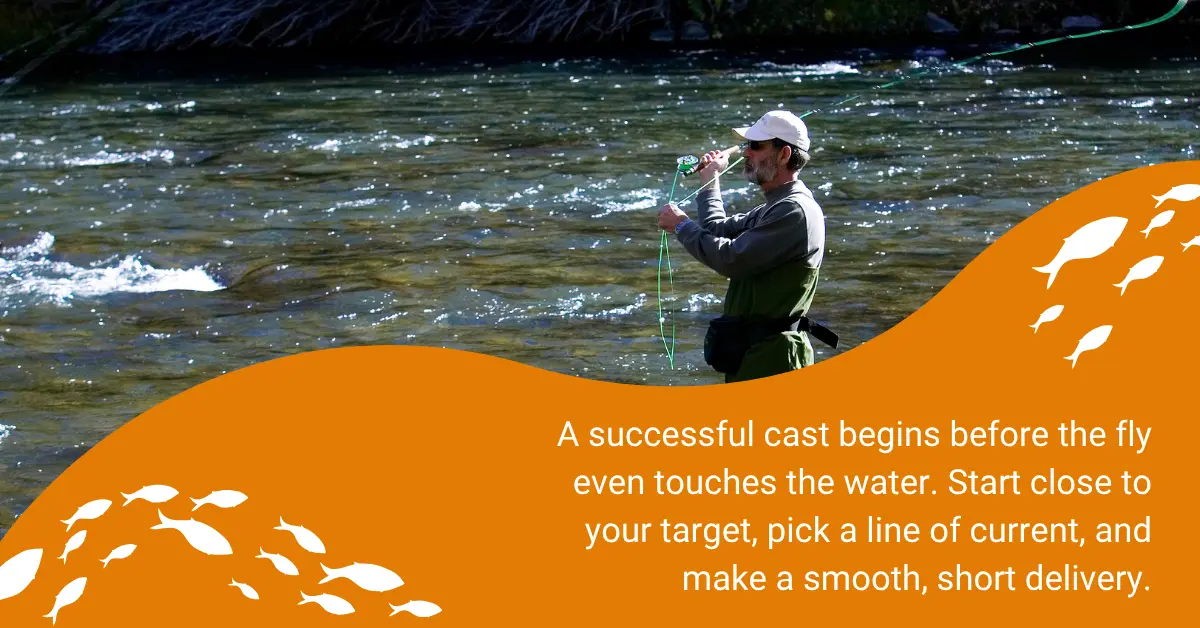
Let your leader and fly move naturally with the water so the fly doesn’t skid or pull unnaturally. If you need more reach, move your feet and adjust your angle rather than adding extra line.
Once the fly is on the water, maintaining a natural drift is crucial. Let the line slide through your fingers, or gently lift and lower the rod tip to keep tension even. If the fly speeds up or slides sideways, adjust by lifting and lowering the tip again rather than aggressively pulling. Keeping extra line to a minimum and maintaining a short, straight path from rod tip to fly helps you react quickly when a fish takes or the drift changes.
Key tips for casting and presentation:
- Start close and pick a single line of current for smooth, controlled casts.
- Land naturally: match the speed of your leader and fly to the current to avoid unnatural movement.
- Maintain light tension: let the line slide or lift/lower the rod tip for a lifelike drift.
- End each drift with a subtle lift to mimic the natural movement of insects leaving the surface.
- Pick up quietly and repeat for multiple passes through the best water.
- Adjust incrementally: if trout don’t respond, change angle, depth, or drift pace, one thing at a time.
- Weighted flies: allow them to sink to the feeding zone naturally, keeping drifts short and controlled.
Finishing a drift cleanly is just as important as the cast itself. At the end of each pass, a gentle lift often triggers strikes that didn’t occur during the initial drift. After a few tries with no luck, adjust one thing at a time instead of changing flies right away. Over time, this approach helps you read the water better and improves both efficiency and success on the river.
Casting and presenting your fly well takes practice, but it pays off. When you place your fly accurately, let it move naturally with the water, and make small adjustments along the way, you put yourself in the spots where trout are feeding and create chances you might otherwise miss. Getting these techniques right can be the difference between catching a few fish and having a really successful day on the water.
Position, Approach, and Gear: Fishing Smarter, Not Harder
Success in fly fishing isn’t just about the fly. It’s also about how you move, where you stand, and what gear you bring. Trout are highly alert and easily spooked, so quiet wading, smart positioning, and a simple, effective setup help you fish effectively and stay safe. Below, we’ll walk through these essentials step by step so you can get more out of your time on the water.
Wading and Positioning
Before stepping into the water, take a moment to watch how it’s moving. Look for likely trout spots, note the current, and plan a path that won’t disturb prime feeding areas. Whenever you can, approach from downstream or from the side so the fish do not notice you. Keep a low profile and use natural cover like rocks, banks, or brush to stay hidden. Watch your shadow too. Bright sun can easily give away your position.
Work near to far—fish the water closest to you first before reaching out to farther lanes. Take small, deliberate steps; rushing through the water or kicking rocks can stir up sediment and spook fish. Position yourself so your casts allow the fly to drift naturally. On larger rivers, break the water into smaller sections: make a few clean drifts, take a step or two, and repeat, moving steadily but quietly.
Crossing safely is important. Take your time, shuffle your feet, and feel the river bottom with each step. Keep a solid stance and use a wading belt or a sturdy stick or pole for extra support. Remember, cold and fast water is stronger than it looks. No fish is worth risking a slip or accident.
Gear Basics
Keeping your gear simple makes fishing easier, helps you stay focused, and lets you pay attention to reading the river and presenting your fly. With the right setup, you can handle almost any trout water without overcomplicating things. Here are the essential pieces and some tips for picking the right rod, line, and accessories.
Choosing a Fly Rod
Picking the right rod makes a big difference. It helps you control your fly, make accurate casts, and read the water more easily. Your rod should match the type of water you’ll be fishing, the flies you plan to use, and the techniques you want to try.
- 9-foot 5-weight: This is often considered the standard “do-it-all” trout rod. It works well for most medium rivers and streams, handles small to medium flies, and gives enough power for moderate wind.
- 4-weight: Lighter rods like this are great for small creeks, tight quarters, and delicate presentations, especially with small dry flies.
- 6-weight: Heavier rods are good for larger rivers, casting bigger flies or streamers, and handling windy conditions or stronger currents.
Choosing the right rod ensures your fly behaves naturally, improves accuracy for both long and short casts, and makes it easier to maintain control in challenging conditions. Read more about Mastering Your Fly Rod Setup: A Step-by-Step Guide here.
Line & Leader Setup
Having the right line and leader setup makes a huge difference. It helps your fly turn over smoothly, drift naturally, and stay convincing to trout. Here’s a solid starting point for most situations:
- Line: Weight-forward floating line works in nearly all conditions, making casting and mending easier.
- Leaders: 9–12 ft for dry flies and film fishing; 7.5 — 9 ft when faster turnover is needed or when fishing streamers in wind.
- Tippet: 5X–6X for delicate dry flies, 4X–5X for nymphs and subsurface fishing, 3X–4X for streamers.
Matching tippet strength to fly size and water conditions helps prevent missed strikes, reduces break-offs, and maintains a lifelike drift for your fly.
Small Essentials
Keep your gear simple but make sure you have what you need. A small fly box with options for the surface, just below, and deeper water will cover most situations. Bring a little floatant for dry flies, a few beads or split shot for weighted setups, nippers for trimming tippet, and a spare leader. Having just the basics lets you adapt as conditions change without carrying too much or getting slowed down.
Seasonal Considerations for Fly Fishing
Fly fishing success depends not just on skill and technique, but also on understanding the river and its seasonal rhythms. Water temperature, flow, and insect activity all change throughout the year, shaping where trout feed and what flies work best. By paying attention to these patterns, you can give yourself a much better chance at a successful day on the water.
Learning About Insect Hatches
We’ve touched on hatches a little already, but they’re worth looking at more closely. Insects are a primary food source for trout, and knowing when and what is hatching helps you pick the right fly. You can learn about hatches in a few ways:
- Books: Guides often outline regional insect life cycles and seasonal patterns.
- The Internet: Many websites and forums provide up-to-date hatch charts and local reports.
- Local Fly Shops: Staff and local anglers can share current hatch conditions and recommend effective flies.
- Personal Observation: Watching the water and noting insect activity firsthand is often the most reliable way to understand what trout are feeding on.
Understanding Key Hatches
Different insects dominate at different times of year. For example:
- Midges: Active year-round, they provide feeding opportunities even in colder months. Learn more about Top Midge Fly Patterns for Fly Fishing Midges here.
- Baetis Mayflies: Often the first and last to hatch each season, making them key targets in spring and fall.
Paying attention to which insects are present and where trout are feeding helps you match your fly patterns and presentations to the food available. This matters for both dry fly fishing and nymphing.
Adjusting Techniques by Season
Seasonal changes in water and insect activity mean you’ll need to adapt your tactics:
- Cold water slows trout metabolism and often pushes feeding times later in the day.
- Warmer water increases activity in faster, oxygen-rich currents.
- Rising or falling flows can move trout into different feeding zones along the river.
Seasonal hatches often follow predictable patterns, and checking a local fly shop or hatch chart can give you current insights. Combine these seasonal cues with careful observation, and you will be presenting your fly where trout are actually feeding, which gives you the best chance of a catch.
Bringing It All Together
Fly fishing for trout is as much an art as it is a skill. Success comes from combining technique, observation, and adaptability, whether you’re nymphing beneath the surface, presenting a dry fly on the film, or casting streamers along the banks and deeper runs. Every cast is a chance to sharpen your skills, read the water, and respond to the subtle cues trout give.
Of course, catching trout is a big part of the reward. But it’s also about being on the water, feeling the rhythm of the river, and seeing your patience and knowledge pay off.
Did you enjoy this post? You’ll probably like these too:
- When to Use a Dry Fly vs a Wet Fly & Key Differences
- What Do Trout Eat? Fly Fishing Entomology
- Top Trout Flies for Winter Trout Fishing
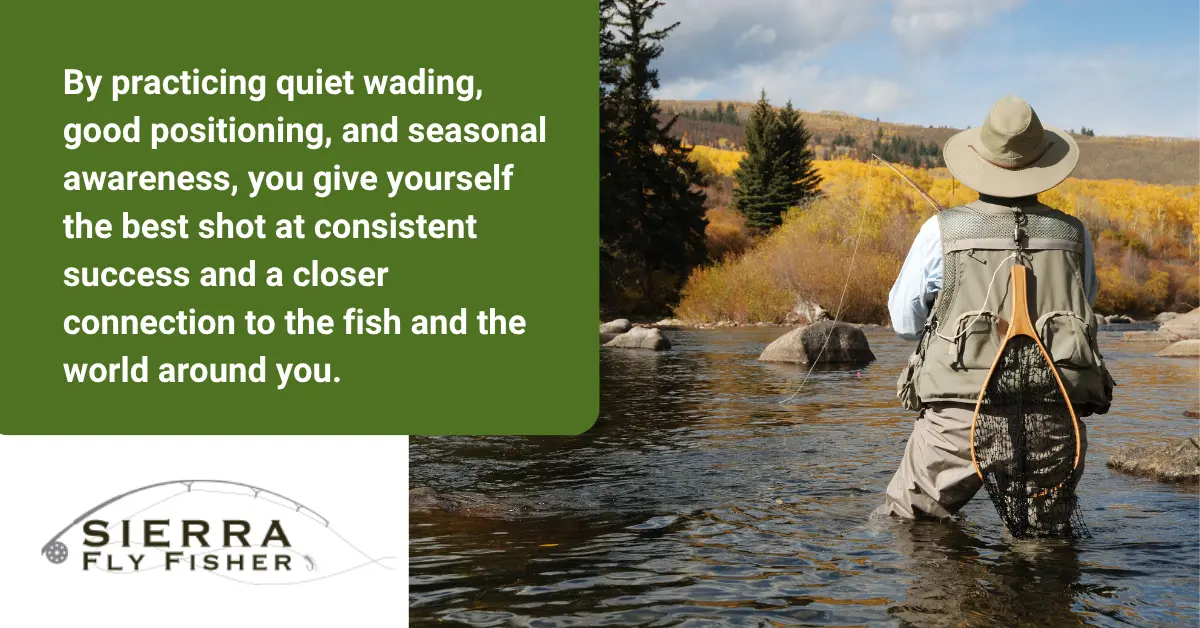
Every trip is an opportunity to practice, explore, and learn, turning each cast into a moment to get better, enjoy nature, and take on the quiet challenge that makes trout fishing so satisfying.
Take Your Skills to the Water with Sierra Fly Fisher
Ready to put your knowledge into action? At Sierra Fly Fisher, we offer guided trips and expert instruction to help anglers of all levels get more out of their time on the water. You’ll learn advanced techniques, explore rivers and streams you might never try on your own, and pick up local insights into insect hatches and trout behavior.
We guide trips in some amazing places like the Merced River, the Kings River, and the San Joaquin River, giving you the chance to fish waters that are as beautiful as they are full of trout.
Whether you’re just starting out and want to build confidence or you’ve been fishing a while and want to sharpen your skills, we provide the guidance and hands on experience to make your next fishing trip more productive and fun. Cast, learn, explore, and get ready for your next trout adventure with us at Sierra Fly Fisher.

Frequently Asked Questions
How do I fly fish for trout?
The best way to fly fish for trout is to match your techniques to the conditions. Nymphing with weighted flies helps you reach fish feeding deeper, while using seasonal fly patterns lets you mimic the insects trout are actually eating. Keep your casts smooth and controlled, and set the hook gently when you feel a bite to improve your chances.
What is the key to successful fly fishing for trout?
The key is mastering a few core techniques, like nymphing, dry fly fishing, and streamer fishing, while avoiding common mistakes like dragging your fly or spooking fish with careless wading. Watching trout behavior, reading the water, and adjusting to seasonal conditions will help you catch more fish and make your time on the river more enjoyable.
Why are trout a popular target for fly fishing?
Trout are popular because they offer a challenging and rewarding experience. Their behavior can vary a lot, and the rivers and streams they live in are often stunning. Each trip is different, and catching trout requires skill and strategy, which makes every success feel that much better.
What is nymphing in fly fishing?
Nymphing is a technique where you use flies that imitate underwater insect larvae. These flies are fished below the surface, sometimes with added weight or indicators, to reach the areas where trout are feeding. It is a subtle and highly effective way to connect with fish and get a sense of what is happening below the water.
How do I choose the right dry fly for trout fishing?
Picking a dry fly is all about matching size, shape, and color to the insects that are currently hatching. Watch what the trout are eating and choose a fly that mimics it. In the summer, bigger flies often work best, while smaller patterns tend to be more effective in spring and fall.


