
Brook trout and brown trout can look surprisingly similar at first glance. Their colors are often different, but color alone can still fool you if you’re not looking at the right markings. Most of the time, you aren’t missing something obvious; you’re just looking at the wrong details first. Once you know what to check, the differences start to stand out quickly, and you’ll stop second-guessing every trout you bring to hand.
Knowing the difference matters before you ever make a cast, because brook trout and brown trout usually live in different kinds of water. If you’re hoping to find brook trout, you’ll usually need to head higher into colder, smaller streams and pocket water. If you’re after brown trout, you’ll spend more time fishing bigger runs, deeper edges, undercut banks, and other spots that give them cover. In this guide, we’ll walk through the easiest ways to tell them apart, then connect that to where to fish, what water to focus on, and how to approach each one.
Brook Trout vs Brown Trout: Fast Comparison
How do you quickly tell a brook trout from a brown trout when you’ve got one on the line? It really comes down to one quick check: look at the body color behind the spots. Brook trout usually show light spots on a darker olive or green body. Brown trout are usually the opposite, with darker spots on a lighter tan or golden body. Once you’ve seen that pattern a few times, it’s hard to unsee.
Here’s what to look for when you’re making a quick identification:
Brook Trout Characteristics:
- Body background: Dark olive to greenish-brown
- Spot color: Red spots with blue halos, mixed with pale yellow spots
- Fin edges: Bright white leading edges on lower fins with a black stripe behind
- Back pattern: Distinctive wormlike (vermiculated) markings
- Tail: Squared-off with scattered spots across the entire body of the caudal fin
- Typical size: 6–10 inches in small streams; 14+ inches in fertile lakes
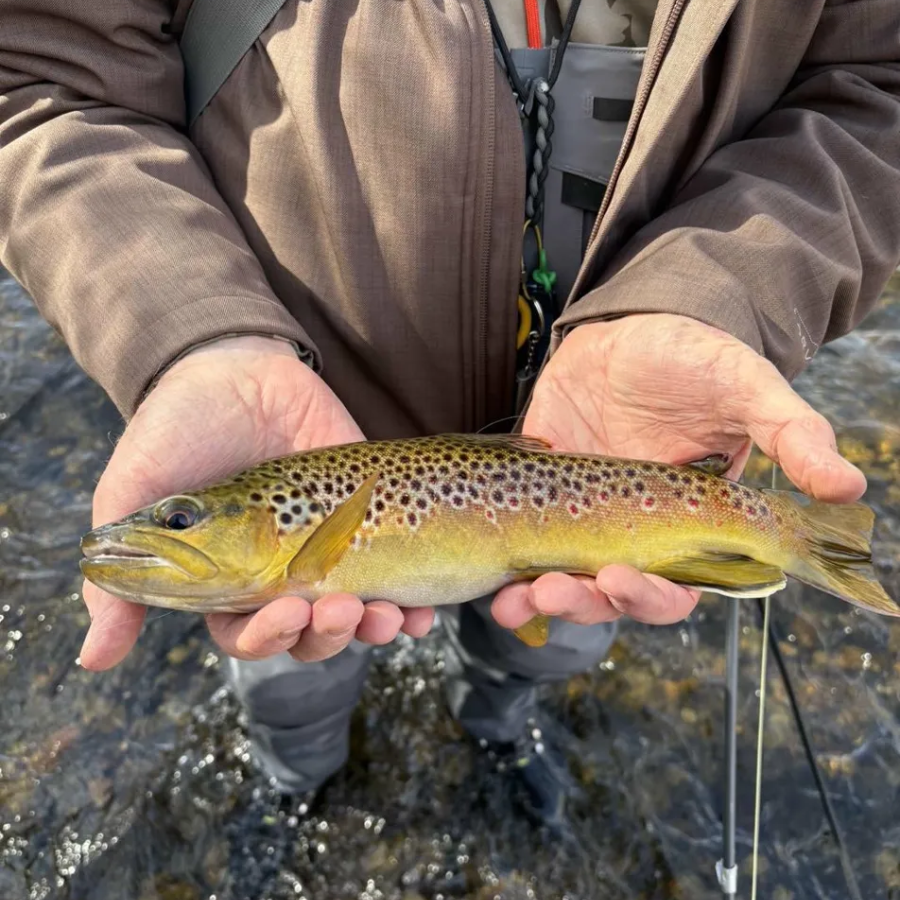
Brown Trout Characteristics:
- Body background: Golden to tan or olive-brown
- Spot color: Large black spots with some red or orange spots haloed in pale rings
- Fin edges: Plain yellowish-orange without white tips
- Adipose fin: Often shows spots (unlike brook trout)
- Tail: Gently forked with minimal spotting
- Typical size: 12–18 inches common; trophy fish exceed 20 inches
Both species can show up in the same general region, but they usually favor different types of water. Browns often do best in larger rivers and mid-elevation streams, while brook trout tend to thrive in colder headwaters and high-elevation lakes.

The fastest ID check: brook trout show light spots on a dark body; brown trout are the opposite — dark spots on a lighter golden body. Once you see that pattern, you won’t unsee it.
Taxonomy & Origins: Char vs True Trout
You’ll hear people say brook trout aren’t really trout. What they mean is that brook trout are a char, while brown trout are a true trout. That sounds like a science detail, but it helps explain why these two fish often look different and why certain features show up again and again.
Brook trout are part of the char group, which includes fish like lake trout and Arctic char. Chars often have light colored spots on a darker body, and brook trout fit that pattern. They also tend to show those wormlike markings along the back that people notice right away once they know to look for them.
Brown trout are in the true trout group, along with Atlantic salmon. Browns usually have darker spots on a lighter tan or golden body. They can still be colorful, but the overall look is usually the opposite of a brookie.
They also come from different places. Brook trout are native to eastern North America, especially the Appalachians, Great Lakes region, and nearby coldwater systems. Brown trout came from Europe and nearby parts of Asia and were introduced to North America later. Today, you can find both species in waters across the U.S., including parts of the Rockies and the Sierra Nevada.
How to Identify Brook Trout
A brook trout, or brookie, is one of the most colorful fish you’ll catch in freshwater. When you lift one out of the water, it doesn’t look plain or washed out. It looks like it was made to be noticed. In the fall, those colors can get even brighter, especially on males.
Body Color
Brook trout usually have a dark olive or greenish brown back that fades into mottled green sides and then into a cream, yellow, or orange belly. Some fish, especially during the fall spawning season, can show even more intense orange or red underneath. In general, strong color often goes along with cold, clean water and healthy fish.
Spot Pattern
Look for small red spots with a faint blue ring around them on the sides. You’ll often see pale yellow spots mixed in, too. That red spot with the blue halo look is one of the most common brook trout clues, and it’s a big reason brookies look so different from browns. Also, the small fin near the tail, the adipose fin, usually doesn’t have many spots on a brook trout.
Wormlike Markings on the Back
Brook trout often have wavy, wormlike lines across their back and sometimes onto the dorsal fin. If you’re unsure what you’re holding, look down at the back. Brown trout don’t have that same wavy pattern.
Fin Details
The lower fins are another giveaway. Brook trout usually have a bright white front edge on the pectoral, pelvic, and anal fins. Right behind that, there’s often a thin black line, and then the rest of the fin shifts into orange or reddish tones.
Tail Shape
Brook trout tails are often more squared off than a brown trout tail, and the tail usually has spots or blotches across a lot of it. Browns can have spots on the tail, too, but brook trout tails often look more heavily marked.
Typical Size
In small mountain streams, a lot of brookies are in the 6 to 10 inch range. In lakes and remote ponds, you’ll sometimes find bigger fish that push past 14 inches. Most of the time, though, brook trout fishing is more about numbers, scenery, and bright fish than it is about trophy size.

Brown trout blend into their surroundings by design — learning to read their spots, fins, and tail shape is the fastest way to tell them from a brookie at a glance.
How to Identify Brown Trout
Brown trout usually look more subtle than brook trout. Instead of bright contrast and loud color, browns blend in with rocks, shadows, and darker water. That’s one reason they can be harder to spot in photos or in off-color water, since their look is made to match the bottom.
Body Color
Most brown trout have a dark brown or olive back that fades into tan, gold, or yellowish sides, with a lighter cream belly. Bigger river fish can take on a rich golden tone, and some anglers call them “butter” colored because of it.
Spot Pattern
Look for larger black spots across the head, back, and sides. You’ll often see some red or orange spots too, usually with a lighter ring around them, but the black spots are the main thing you notice first. Compared to brook trout, browns usually look like dark spots on a lighter body, not the other way around.
The Small Fin Near the Tail
Check the little fin between the main back fin and the tail, called the adipose fin. Brown trout often have spots on them. Brook trout usually do not, so if you can clearly see spots on that fin, there’s a good chance you’re holding a brown.
Fin Look
Brown trout fins are usually pale yellow to orange, but they don’t have the bright white front edge and thin black line you see on brook trout. If the lower fins don’t have that white edge, it’s probably not a brookie.
Head, Body, and Tail Shape
As brown trout get bigger, they often look thicker through the body and heavier in the head than a brook trout of the same length. The tail is usually more gently forked or only slightly squared off, and it often has less spotting than a brook trout tail.
Young Brown Trout
Small browns can show faint dark bars on their sides. That’s normal for young trout, and it can throw people off. With juveniles, don’t get hung up on overall color. Focus on the darker spots and the lack of white edges on the lower fins.
Brown Trout Color Changes and Common Variations
Brown trout can look very different depending on where they live. Fish from big lakes can be pale and silvery. Fish from small, shaded creeks can be darker with heavier spotting. Stocked browns may look lighter at first, with worn fins, but after they settle in, they often darken up and look more like wild brown trout.
When you’re trying to ID a brown trout, don’t rely on one detail alone. Use a few clues together, like dark spots, fin edges, tail spotting, and whether the adipose fin has spots. Browns vary a lot, so stacking a few features is the easiest way to feel confident.
Brook Trout vs Brown Trout Habitat and Behavior
Knowing where each species likes to live helps you pick better water from the start. Brook trout and brown trout can share the same watershed, but they usually stack in different parts of it, and that pattern stays pretty consistent. Brookies lean toward colder, higher water. Browns handle a wider range of conditions and often take over once the water gets a little warmer and deeper.
This also matters in late summer when flows drop and water temps climb. In those conditions, it’s smart to focus on the coldest, most oxygen-rich sections of the system and handle fish quickly, especially in the heat of the day.
Brook Trout Habitat
Brook trout do best in small, cold headwater creeks, spring-fed streams, beaver ponds, and high-elevation lakes. In the Sierra Nevada, that often means higher elevations where the water stays cold longer into summer.
Preferred Water Characteristics:
- Temperature range: usually 50 to 60°F, with the sweet spot often around 55°F
- Bottom type: clean gravel that supports spawning and insect life
- Oxygen: high dissolved oxygen
- Flow: moderate current seams in riffles and runs
Brook trout usually avoid slow, warm slack water, and they also don’t love heavy, pounding fast water where they have to burn energy just to hold position. You’ll often find them near undercut banks, behind boulders, and at the heads or tails of pools where the current brings food to them.
When summer heat sets in, look for shade, spring inflows, and cold riffles that keep water temps down. If the water feels warm on your hands at midday, it’s often worth moving higher or finding a colder feeder stream.
Follow the elevation. Brook trout stack higher in cold headwaters; browns take over downstream where the river gets bigger and warmer — knowing this before you start saves hours of guessing.
Brown Trout Habitat
Brown trout can live in a wider range of places than brook trout. You’ll find them in larger freestone rivers, tailwaters, deeper pools in mid-elevation streams, and cool lakes with structure. That flexibility is a big reason they’ve done so well in so many parts of the country.
Environmental Tolerances:
- Temperature range: can handle water into the mid 60s°F, and sometimes a bit higher for short periods if oxygen is strong
- Water clarity: more tolerant of some cloudiness and richer water
- Water types: comfortable in both still water and moving water
For browns, cover matters more than almost anything else. They love undercut banks, logjams, boulder fields, submerged weeds, and deep shaded pools where they can sit tight and ambush food. They’re built for that hit-and-disappear style of feeding, especially when there’s structure to hide in.
In a lot of Sierra water, the pattern is pretty simple. Brook trout usually hold higher in the colder headwaters, while brown trout become more common farther downstream, where the river gets bigger, deeper, and a little warmer. That’s also where you’ll often find larger fish.
Feeding Timing:
- Browns often feed best in low light, especially at dawn and dusk
- Overcast days can fish like a longer morning or evening window
- Midday can feel slow, even when the water looks perfect
If you’re targeting bigger browns, it’s usually worth planning around those low-light windows instead of forcing it in bright midday sun.
Fishing Brook Trout vs Brown Trout
Once you’ve figured out whether you’re in brook trout water or brown trout water, you can plan the day a lot better. It’s less about changing everything after you hook a fish, and more about choosing the right kind of water to start with, then picking flies and presentations that fit how that fish tends to feed.
In general, brook trout are usually more willing, especially in small water that doesn’t see much pressure. Brown trout are often more cautious, and they’ll make you earn it. They use depth, shade, and cover to their advantage, and they’re more likely to ignore a fly that doesn’t feel right. So the main difference is this: brookies reward simple, clean fishing in tight water, while browns reward patience, good drifts, and smart targeting of cover.
Targeting Brook Trout
When you’re fishing for brook trout, the biggest thing is usually how you move through the water. Stay quiet, stay low, and make short, clean presentations in the right spots. You usually don’t need a perfect fly, but you do need a natural drift.
Recommended Gear
You’re usually fishing tight spaces, short casts, and smaller fish, so lighter setups just feel right.
- Light 2 to 4-weight fly rods
- Ultralight spinning setups with 4-pound test
- Short, accurate leaders (often 7.5 feet is plenty in tight water)
Effective Fly Patterns and Lures
Brookies will eat a lot of different things. If your fly lands softly and drifts clean, you’ll usually be in the game.
- Classic dry flies: Elk Hair Caddis, Parachute Adams, Stimulator
- Small nymphs: Copper John, Hare’s Ear in sizes 14 to 18
- Tiny spinners: Panther Martin, Mepps in 1/16 to 1/8 oz
During hatches, brookies will rise eagerly, which is why dry fly fishing can be so fun. You usually don’t need a perfect match, as long as your presentation is decent.
Approach Strategy
Brook trout are often found in small, clear streams where they can spot you before you ever make a cast. That’s why stealth matters so much. Even fish that are willing to eat will slip under a bank or tuck behind a rock if you rush in, stomp around, or throw a shadow over the water.
- Stay low and move slowly
- Avoid wading through the run you want to fish
- Make short, controlled casts; often, 15 to 20 feet is enough
- Watch for shadows and heavy footsteps
If you spook a pocket or a pool, don’t just keep hammering it. Pause for a minute, back out, and come at it again from a better angle, or move upstream and circle back later.
Timing and Season
Fishing for brook trout is usually best after runoff drops and the water settles into a colder, more stable pattern. The exact timing depends on where you are, but cooler conditions usually mean better fishing.
- Late spring through early fall is often the most consistent window
- Summer can fish really well when flows are steady, and the water stays cold
- In hot weather, the best action is often early and late in the day
Conservation Note
Brook trout don’t handle stress very well, especially in warm water. Keep them wet, handle them gently, and get them back quickly. In some places, keeping a few may be allowed or even encouraged, but always check current regulations first.

Brook trout reward stealth and short casts in tight water, while brown trout demand patience, smart positioning, and a drift that lands exactly where the fish is holding.
Targeting Brown Trout
Fishing for brown trout is usually more about patience than covering a lot of water. You’ll often do better by slowing down, focusing on the best structure, and making each drift count. Browns aren’t always hard to catch, but they do notice sloppy presentations and noisy approaches.
It also helps to think about how browns position themselves. Instead of spreading out evenly through a run, they often hold in a few specific lanes, seams, undercut banks, or shaded pockets where food comes to them. If you can find those spots, you usually don’t need to fish a ton of water. You just need to fish the right water carefully.
Recommended Gear
Browns live in bigger water more often, and you may be dealing with heavier flies, longer drifts, and stronger fish.
- 4 to 6-weight fly rods with enough backbone for bigger fish
- Medium light spinning tackle with 6 to 8 pound test
- Longer leaders (often 9 to 12 feet) with finer tippet in clear water
Effective Fly Patterns and Lures
Brown trout, especially larger ones, often feed on bigger prey. That’s one reason streamers and larger nymphs can work so well. Let’s talk about it:
- Streamers: Woolly Bugger, sculpin patterns, zonkers that imitate baitfish and crayfish
- Larger nymphs: stonefly patterns, Pat’s Rubber Legs, girdle bug style patterns
- Dry flies: best when you can present them cleanly during evening hatches
- Bait anglers: nightcrawlers, minnows, where allowed by regulations
Approach Strategy
Brown trout usually stay close to cover, and they often won’t move far for a fly. That means your approach matters just as much as your fly choice.
- Focus on cover like undercut banks, deep seams, boulders, and logs
- Keep false casting to a minimum
- Watch your shadow and your wading
- Try to make your first drift through the lane count
Timing and Season
Brown trout often feed best when the light is lower. That doesn’t mean you can’t catch them midday, but low-light windows are usually more consistent.
- Early morning and evening are often the best windows
- Overcast days can keep fish active longer
- Midday can be slow in bright sun, even when the water looks perfect
Conservation Note
Brown trout can still take a hit from warm water and long fights, especially on busy rivers. If water temperatures are pushing past about 65°F, it’s often better to fish early, fish higher and colder water, or wait for cooler conditions instead of stressing trout that may not recover well after release. Barbless hooks and quick releases help too, especially when you’re fishing popular water where fish get handled more often.
Brook Trout vs Brown Trout: Which Is Better for Your Next Trip?
Brook trout and brown trout can give you two totally different kinds of days on the water. One is lighter, faster, and more visual (brook trout). The other is slower, more focused, and sometimes built around a small number of chances (brown trout). Neither one is better across the board. It just depends on what you want out of the trip.
If you want steady action, bright fish, and small water you can explore on foot, brook trout are hard to beat. You’ll usually find them in colder headwaters and high lakes, and they’ll often eat dries and small nymphs without making you earn every single bite.
If you’re willing to trade numbers for a better shot at larger brown trout, they’re often worth targeting. They tend to hold in bigger water with more depth and cover, and the bigger fish usually feed in short windows or from very specific spots. That added challenge is part of what makes them so rewarding.
For families and newer anglers, brook trout trips can be a great fit because the day stays active and the water is often easier to read. For experienced fly fishers, brown trout trips can feel more rewarding because every decision matters, and the fish tend to fight harder.
The good news is you don’t have to choose between them. In the right area, it’s possible to fish higher, colder water for brook trout first, then move down into bigger water later in the day for brown trout.
Book a Sierra Fly Fisher Trip
A guided day can save you a lot of trial and error. Instead of spending half the day guessing where to start, you can fish water that fits the season, current conditions, and the kind of trip you want.
At Sierra Fly Fisher, we guide trout trips in and around Yosemite and throughout the High Sierra, including stretches of the Merced, the Tuolumne, the San Joaquin headwaters, and nearby areas. Depending on the time of year, we may focus on smaller high-country water or spend the day on bigger rivers with deeper runs, better structure, and more room to cover water.
A trip also gives you a better read on how to approach the water in front of you. We’ll help you read current seams, spot likely holding water, adjust to changing light or flows, and make better decisions about where and how to fish. You’ll also get help with casting, drift control, and presentation, along with simple feedback you can use the next time you’re out on your own.
If you’re planning a trip, let us know your timing and what kind of day you’re after. We’ll recommend water that makes sense for the season and put together a plan that fits your goals. Reach out to us by clicking here.
FAQ
Are brook trout or brown trout better to eat?
Both can taste good, but flavor usually depends more on the water the fish came from and what it’s been eating than on the species itself. In general, trout from cold, clean water tend to taste better. Always check local regulations before keeping fish.
Can brook trout and brown trout live together in the same stream?
Yes. It’s pretty common for both species to show up in the same stream system, just in different sections. Brook trout are usually higher up in colder, smaller water, while brown trout are more common lower down in bigger, slightly warmer stretches. In many places, browns can also push brookies farther upstream over time.
How can I tell a tiger trout from a brook or brown trout?
Tiger trout are a cross between brook trout and brown trout, and they usually look nothing like either one once you know what you’re seeing. Instead of round spots, they have a marbled, maze-like pattern across most of their body. If you’re not sure, take a clear side photo and compare it to a reliable ID guide, or ask someone who’s seen them before. Once you’ve seen a tiger trout in person, it’s hard to mistake it again.
Do brook trout and brown trout spawn at the same time?
In most places, yes, they both spawn in the fall. Timing varies by elevation and water temp, but late September through November is a common window. During the spawn, you may see brighter colors and more aggressive behavior. It’s also a good time to be careful where you step, since trout lay eggs in gravel beds. If you see fish actively spawning or you notice clean, light colored patches of gravel, it’s best to avoid wading through that area.
Which species is better for beginner fly anglers, brook or brown trout?
Brook trout are usually the easier starting point. They tend to eat a wider range of flies, and they’re more likely to take even when your drift isn’t perfect, which helps you build confidence fast. Brown trout can be more picky, and they often demand a cleaner presentation, but they can also be more rewarding, especially if you’re hunting bigger fish. A lot of anglers start with brook trout water to get the basics down, then move to brown trout as they want more of a challenge.

Book Your Yosemite Fly Fishing Adventure Today
Experience Yosemite’s legendary rivers with an expert guide.


