
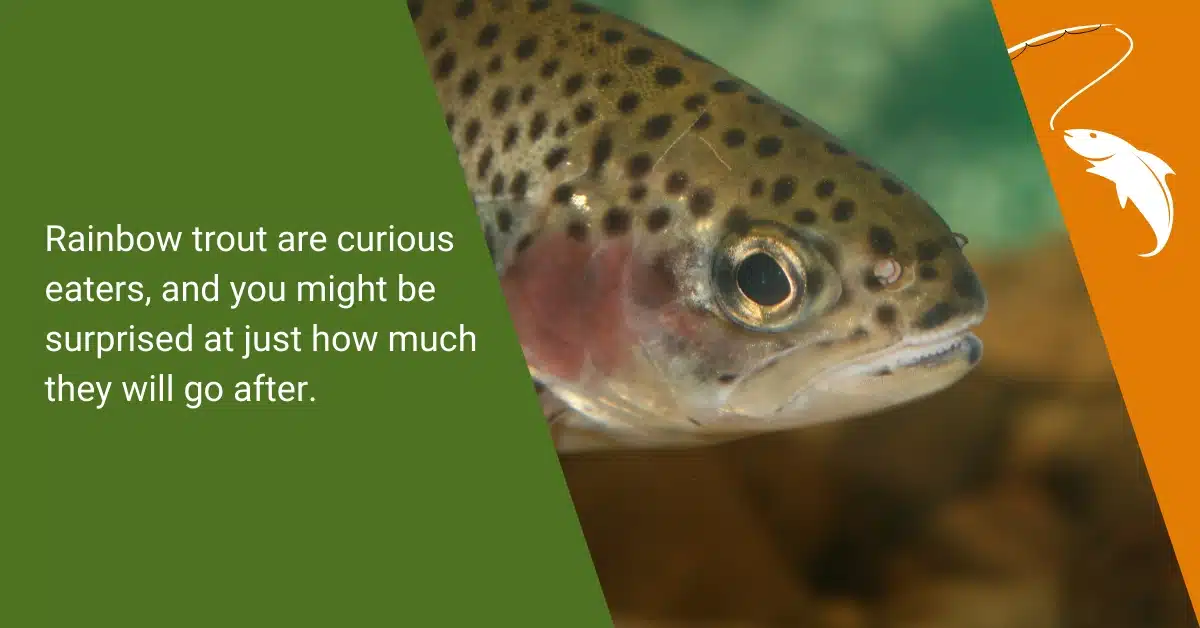
They do eat a wide variety of prey, from insects and crustaceans to small fish and even tiny frogs. Their diet changes with the seasons and their environment. In the spring, they often focus on aquatic insects like mayflies and caddisflies, while in the summer, terrestrial insects such as grasshoppers and ants take the spotlight. Knowing what rainbow trout eat can give you clues about where they’re feeding and how to approach fishing in rivers, lakes, and ponds.
Rainbow Trout Diet Overview
Rainbow trout are flexible eaters. They go after whatever’s easy to catch, abundant, and worth the energy. Most of the time, they focus on a few main types of food:
- Small fish – Species like shiners, chubs, sculpins, and even juvenile trout are fair game. Different trout species may hunt slightly differently, but most go after similar prey.
- Crustaceans – Amphipods, crayfish, and other small crustaceans are especially important in slower-moving waters.
- Amphibians – Frogs and tadpoles sometimes make an appearance, especially in warmer months.
That mix of meals lets rainbow trout thrive in just about any water, from rivers and lakes to ponds, you name it.
But they’re opportunistic by nature, too. If something tasty drifts by, they’ll take it:
- Fish eggs – A convenient snack during spawning grounds season.
- Leeches – Protein-packed and easy to catch when other prey is scarce.
- Mollusks – Small snails and mussels add extra calories.
And as rainbow trout grow and get bigger, they can become surprisingly bold predators. They’ll chase smaller cutthroat trout or even younger rainbows if the chance arises. Their mix of adaptability and hunting skill is what makes them so successful in a wide range of habitats.
Aquatic Insects in Rainbow Trout Diet

Nutrient rich and abundant, these little creatures keep trout healthy and growing. While they eat a range of insects, mayfly nymphs, caddisflies, and stoneflies are the main picks. They also snack on midges and other small aquatic life depending on what’s available. Let’s break down the main types:
Mayflies
Mayflies are a trout favorite, particularly during hatches when they show up in huge numbers. Trout mostly eat nymphs drifting in the current. These nymphs can live nearly a year before becoming adults, so trout have access to them almost year round. Different types of nymphs including clingers, crawlers, swimmers, and burrowers live in different parts of streams, which means trout always have something to feed on. When nymphs become duns and spinners, trout move to the surface, making the most of every stage of the mayfly lifecycle.
Caddisflies
Caddisflies are another staple. Trout feed on both nymphs and adults, with species like black caddis emerging as early as February. Trout will often pick nymphs off the bottom or midwater, then snatch adults as they float near the surface. Anglers mimic this in fly fishing by using elk hair caddis or X caddis patterns, drifting them through pools to tempt feeding trout.
Stoneflies
Stoneflies become especially important during colder months. Trout eat both nymphs and adults, and larger stonefly species, such as salmonflies, offer a hearty, energy-rich meal. Stonefly nymphs are easy to spot with their sturdy bodies and two tail appendages, living in cold, oxygen-rich streams for one to three years. This makes them a reliable food source for trout throughout the year.
Terrestrial Insects Eaten by Rainbow Trout
In warmer months, most trout often turn their attention to insects that live near the water. Grasshoppers, ants, and beetles can fall into streams and rivers, providing an easy and nutritious snack. These terrestrial insects aren’t just a side dish, they can be a major part of a trout’s diet when aquatic insects aren’t as abundant.
Grasshoppers
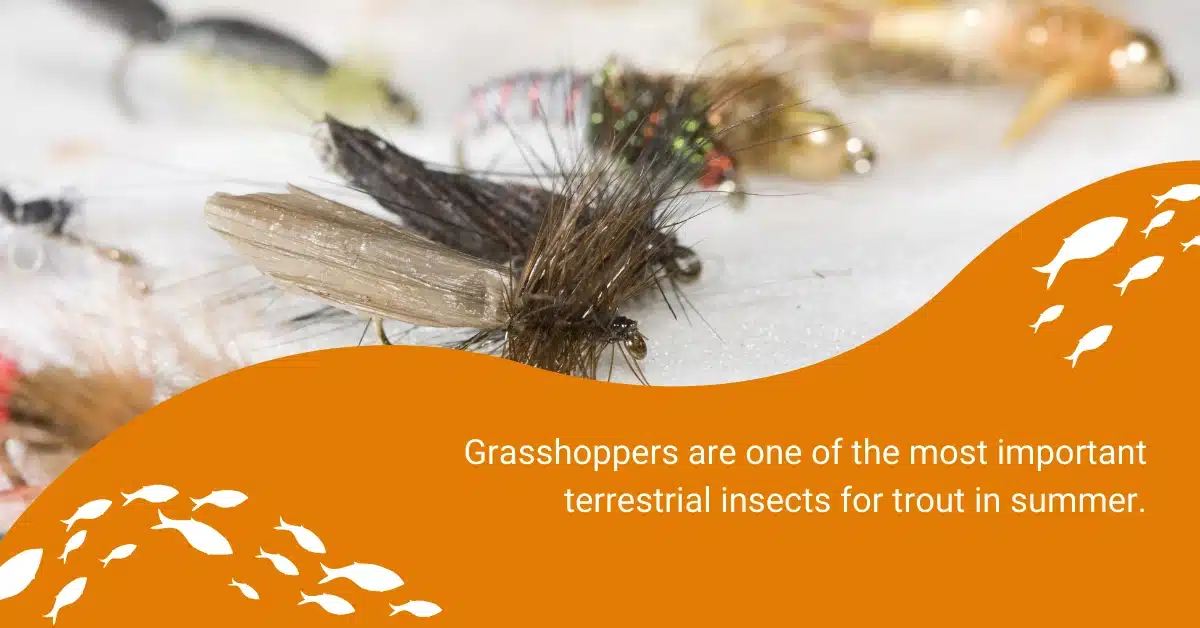
They tend to hang around the edges of streams and ponds, and when they tumble into the water, they become an immediate target. Their size gives trout a high energy meal, and their abundance during hot summer months makes them extremely valuable. Trout often hover near overhanging grasses and vegetation, anticipating the occasional fall. For anglers, casting near grassy banks during sunny days can be particularly effective, as trout are ready to strike anything that lands in the water.
Ants
Small but packed with nutrition, ants often get washed into streams in early summer and again in the fall. Trout eagerly pick them off the surface, making them a reliable snack when other prey is scarce. Patterns that imitate ants floating on the water can be surprisingly effective for enticing strikes from feeding trout. Even though ants are tiny, trout don’t hesitate, as they see them as an easy source of protein that’s hard to resist.
Beetles
Beetles are another valuable terrestrial food source. Their hard shells provide more nutrition per insect than smaller prey, and they often float briefly before sinking, giving trout time to strike. Trout are attracted to the movement of beetles on the water, and anglers can mimic them with floating patterns that resemble a struggling insect, which often triggers aggressive feeding behavior.
Crustaceans Consumed by Rainbow Trout
Crustaceans are high-calorie, nutrient-rich prey that trout actively seek out. These include freshwater shrimp, crayfish, scuds, and sowbugs. Each offers unique benefits, and trout will target them in specific habitats, especially along edges and in slower-moving water.
Freshwater Shrimp
Freshwater shrimp are a key food source, especially in high-altitude lakes and cold, oxygen-rich streams. Mysis shrimp, for instance, provide a steady, reliable source of nutrition. Trout actively hunt them in midwater or near the bottom, and anglers can replicate this with shrimp patterns to great effect.
Crayfish
Crayfish are prized by trout for their size and energy content. Trout search for them in rocky or weedy areas, often picking them off the bottom or hiding among stones and submerged vegetation. Their abundance and rich nutritional value make crayfish a favorite meal for larger rainbow trout.
Scuds and Sowbugs
Scuds and sowbugs are smaller but plentiful. They thrive in slow-moving water or along stream edges and provide trout with a reliable, easy-to-catch meal. While they are tiny, their abundance ensures trout always have a backup food source when larger prey is scarce.
Small Fish as Food for Rainbow Trout
As rainbow trout get bigger, small fish become a bigger part of their diet. Trout over a foot long often go after smaller fish eagerly, showing just how flexible they are when it comes to finding food. In lakes, rainbow trout feed on a mix of little fish and aquatic bugs, taking whatever is easiest to catch.
Minnows
Minnows are a favorite target for larger trout. They’re full of protein and energy, which helps the trout grow strong and stay healthy. Trout often dart quickly to snatch minnows from schools, making for some exciting hunting. In many lakes and slow moving rivers, minnows are everywhere, so trout rely on them as a steady food source.
Sculpin
Sculpin are another important small fish for trout, especially where minnows are less common. These bottom dwelling fish hide near rocks or logs, and trout know just where to find them. Sculpin provide good nutrition, and trout will actively hunt them along rocky streambeds and lake edges.
Worms and Leeches in the Rainbow Trout Diet
Rainbow trout also actively feed on worms and leeches, which offer a reliable and nutritious meal. These foods become particularly important in environments where other prey is less abundant, especially for native rainbow trout, providing them with a dependable fallback option.
Earthworms
Earthworms are a common and easily accessible food source, especially after rainfall when they’re more likely to wash into streams and rivers. Trout will eagerly feed on them at the surface or just below, taking advantage of this seasonal bounty.
Leeches
Leeches are another regular component of a rainbow trout’s diet. They’re often found in lakes and streams and provide a consistent source of nutrition. Trout will actively seek them out, particularly in slower water or along the edges where leeches are more concentrated. Their prevalence in these habitats makes them a dependable part of the trout’s diet throughout the year.
Amphibians and Mollusks Eaten by Rainbow Trout
Rainbow trout supplement their usual meals with young amphibians and mollusks, adding protein and nutrients that help them grow and stay healthy. These foods can be especially important in certain seasons or habitats, giving trout access to extra calories and minerals when other prey is less available.
Frogs
Frogs are an energetic and protein-rich snack for rainbow trout, especially when they are small or moving across the water. Their sudden, unpredictable movements make them exciting and challenging prey. Trout can often be seen chasing frogs in shallow areas during warmer months, taking advantage of the calories and nutrients they provide.
Snails and Mussels
Mollusks like snails and mussels provide a steady source of nutrition, particularly in deeper waters where other prey may be less abundant. Trout feed on them along the bottom, gaining calories and minerals that complement the rest of their meals. Because snails and mussels are present year-round in many lakes and streams, they serve as a reliable source of sustenance for trout at all times.
How Environment and Habitat Shape What Rainbow Trout Eat
We’ve already seen that rainbow trout are flexible eaters, taking advantage of insects, small fish, crustaceans, and more. But where they live and the conditions around them play a big role in what actually ends up on their menu. Water temperature, habitat type, and prey availability all shape feeding behavior, helping trout make the most of whatever’s around. Trout feed best between roughly 34 and 67 degrees Fahrenheit, but they’ll adapt if things are colder or warmer.
Even small details can matter. Freshwater snails, for example, aren’t flashy, but in streams and lakes with lots of vegetation they’re a dependable, nutrient-rich snack.
Lakes
In lakes, trout mix easy meals with high-energy targets:
- Minnows – Abundant and protein-rich, trout often dart quickly to snatch individuals.
- Frogs – Substantial, lively, and packed with calories, frogs are both a challenge and a reward.
- Sculpins – Bottom dwellers that hide near rocks and logs, offering predictable opportunities.
- Crustaceans – Crayfish and similar prey provide a filling, nutritious bite.
Lakes offer a balance of smaller, steady food and bigger, rewarding meals. Trout take what’s easiest to catch but don’t pass up a high-reward snack.
Rivers
Rivers bring a faster, more variable menu. Rainbow trout here often feed on:
- Earthworms – Especially after rain, when they wash into the water.
- Leeches – Slow-moving but high in protein, a reliable choice.
- Small fish – Juvenile salmon, minnows, and other tiny species give concentrated energy.
- Midges and aquatic insects – Trout target these drifting along currents and edges.
The flow of the river shapes where and how trout feed. They adapt to currents, depth, and the seasonal abundance of prey, keeping themselves well-fed in changing conditions.
Ponds
Still water may seem easier, but trout remain opportunistic. In ponds, they often eat:
- Small fish – Easy to find near shallow areas and edges.
- Crustaceans – Scuds, crayfish, and sowbugs add calories and nutrients.
- Amphibians – Frogs and tadpoles offer extra protein when other prey is scarce.
Even in calm water, trout look for the easiest, most rewarding meals, especially near vegetation or structure where prey gathers.
When Do Rainbow Trout Feed?
We’ve mentioned that trout feed at all times of day, but certain periods are prime opportunities:
- Dawn: Often the most active feeding period. Trout hunt crayfish, minnows, and frogs, taking advantage of low light and cool water.
- Midday: Feeding slows. Trout move to deeper pools, focusing on smaller prey like nymphs and minnows.
- Sunset: Evening rivals dawn for activity. Trout rise to the surface, going after hatching insects, minnows, sculpins, and midges. Moth patterns can trigger some of the most aggressive strikes of the day.
By understanding how habitat, water, and timing affect trout feeding, you can predict where and when they’re likely to strike, making your time on the water far more productive.
Seasonal Variations in Rainbow Trout Diet
Rainbow trout don’t eat the same thing year-round. Their menu changes with the seasons, water temperature, and what’s drifting by. We’ve already talked about their main food groups—now let’s see how those meals shift throughout the year.
Winter
Winter slows a lot of insect activity, so trout focus on what’s available. Minnows, midges, and nymphs become the backbone of their diet. Cold water slows their metabolism a bit, but trout still actively hunt, often sticking to edges, slower pools, or tailwaters where prey is concentrated. Even in the chill, amphibians and mollusks like frogs and snails can supplement their meals when available.
Spring
As temperatures rise, so does the menu. Early spring sees trout feeding heavily on minnows, shrimp, and dragonflies. Aquatic insects, especially mayflies like Blue Wing Olives, start to emerge, providing trout with fresh, easy protein. This period helps them build energy reserves for the busy summer months.
Summer
Summer is the feeding season at its peak. Insects, both aquatic and terrestrial, are everywhere, and trout take full advantage. Grasshoppers, ants, dragonflies, and cicadas become easy snacks near the water’s edge, while small fish and frogs provide big, energy-rich meals. Trout often feed aggressively during cooler parts of the day, especially near sunset, when surface insects and small fish become concentrated and easier to catch.
Fall
Fall brings a mix of leftovers from summer and early opportunities for winter meals. Trout continue to eat insects and small fish, and salmon eggs become a seasonal treat in rivers where spawning occurs. They are still opportunistic, picking off whatever’s most abundant as they prepare for the colder months ahead.
Putting It All Together
Knowing what rainbow trout eat is key to a successful day on the water. Whether you’re fishing for wild trout or stocked fish, these opportunistic feeders will go after a wide variety of prey, from aquatic and terrestrial insects to crustaceans, small fish, worms, leeches, amphibians, and mollusks. Their diet shifts with the seasons and depends on factors like water temperature and local food availability. Understanding what they eat and when they feed can help you choose the right bait or fly for fly fishing, giving you a better chance at a memorable catch.
Did you enjoy this post? You’ll probably like this one too: When is Trout Season in California
Fishing with Sierra Fly Fisher
At Sierra Fly Fisher, we take much of the guesswork out of trout fishing. Our experienced guides share local knowledge, hands-on instruction, and practical tips to help you read the water, select the right flies, and refine your casting and presentation. On our trips, you will explore some of the best trout waters in the Sierra Nevada and beyond.
Every outing is designed to give you more than just a catch. You will gain new skills, build confidence on the water, and create lasting memories. Book your guided trip today and experience the thrill of trout fishing in some of the most beautiful rivers and lakes the region has to offer while making memories you’ll remember for years. Contact us now to reserve your spot and start planning your adventure.

Frequently Asked Questions
What do rainbow trout eat in the winter?
Rainbow trout mainly eat minnows, nymphs, and midges in the winter when food is scarce. So, if you’re fishing during this season, keep that in mind!
Are grasshoppers a good bait for rainbow trout?
Absolutely, grasshoppers make great bait for rainbow trout, especially in the summer when they’re abundant around water. It’s a natural choice that can really increase your chances of a catch.
How does the diet of rainbow trout change with the seasons?
Rainbow trout have a seasonal diet that shifts with prey availability: they feast on insects like mayflies in spring, enjoy a mix of insects, fish, and amphibians in summer, and settle for smaller prey like scuds and midges in winter. It’s fascinating how their eating habits adapt to the changing environment.
What are the primary crustaceans consumed by rainbow trout?
Rainbow trout primarily feast on freshwater shrimp, crayfish, scuds, and sowbugs, which are nutritious and energy-packed options for them. If you’re looking to understand their diet better, those crustaceans are definitely at the top of the list.
When are rainbow trout most active in feeding?
Rainbow trout tend to be most active in feeding during dawn and dusk, as they search for food like crayfish, minnows, and insects. So, those early morning and late evening outings are your best bet for catching them.


